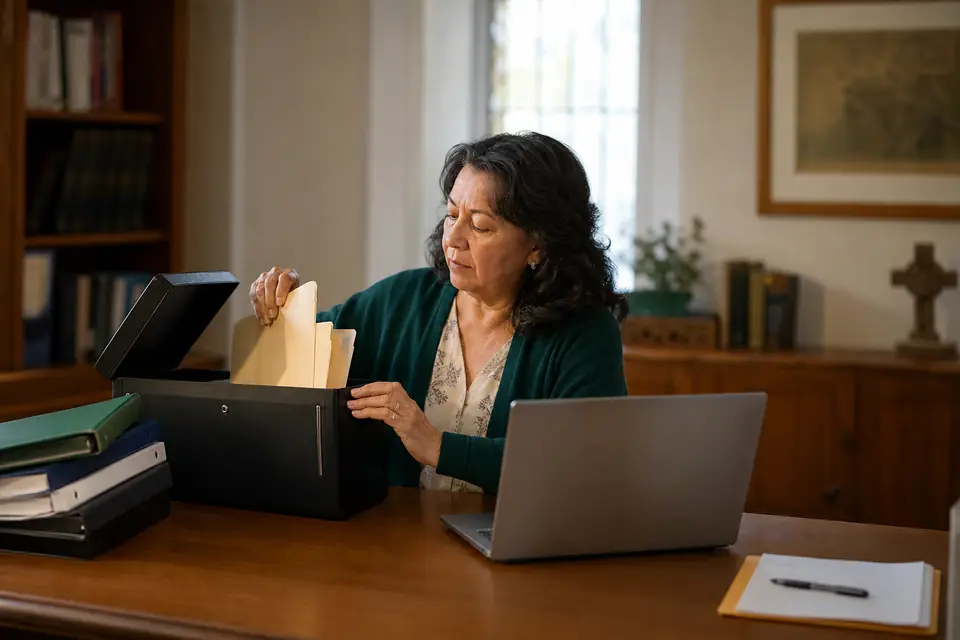
Recordkeeping sounds like the dullest part of running a nonprofit, and it is one of the most protective. The IRS says in Publication 4221-PC that an organization that does not keep required records may be unable to show that it qualifies for exemption or should be classified as a public charity. Good records also let you file accurate returns, answer donor questions and pass a grantmaker's review without a scramble.
Why the IRS cares
A 501(c)(3) public charity must keep books and records that show it complies with the tax rules. In practice that means you can document:
- the sources of your receipts, so you can separate gifts from program income and complete the public support schedule (see public charity vs. private foundation);
- what you spent and why, so the return matches your activities;
- income from any unrelated business, so you can prepare Form 990-T if needed;
- grants to individuals, with case histories showing the purpose, how the recipient was selected and any relationship to insiders.
The law generally does not require a particular kind of system. A small organization can work from a checkbook and a spreadsheet; a larger one will want accounting software and a general ledger. What matters is that the books show gross receipts, purchases, expenses, employment taxes and assets, and that you keep the documents that support each entry.
The permanent corporate records
Publication 4221-PC lists records a charity should keep permanently:
- the application for recognition of exemption (Form 1023 or Form 1023-EZ) and everything you filed with it,
- the IRS determination letter, the letter recognizing your exemption,
- organizing documents: articles of incorporation and bylaws, with every amendment,
- board minutes.
Add to this list the records you will want for decades even though no rule names them: your EIN confirmation letter, signed conflict of interest statements (see conflict of interest policy), board-adopted policies, and any IRS or state correspondence about your status. The Form 1023 instructions also tell you to keep the comparability data you used to set compensation in your permanent records.
How long to keep everything else
The general rule. Keep records that support an item on a return until the statute of limitations for that return runs. That is the point at which you can no longer amend the return and the IRS can no longer assess additional tax. Publication 4221-PC says the period generally runs three years after the date the return is due or filed, whichever is later.
Employment tax records. If you have employees, keep employment tax records for at least four years after you file the fourth-quarter return for the year. Publication 15 lists what to keep, including your EIN, the amounts and dates of all wage payments, employees' names, addresses, Social Security numbers and dates of employment, their Forms W-4, the dates and amounts of tax deposits, copies of returns filed, and records of fringe benefits and expense reimbursements with their substantiation.
Non-tax reasons. When records are no longer needed for tax purposes, keep them until they are no longer needed for other purposes. A grant agreement, an insurer, a lender or a state agency may require a longer period.
| Record | Suggested minimum | Basis |
|---|---|---|
| Articles, bylaws, amendments | Permanent | Pub. 4221-PC |
| Form 1023 or 1023-EZ and determination letter | Permanent | Pub. 4221-PC |
| Board minutes | Permanent | Pub. 4221-PC |
| Annual returns and supporting books, receipts, bank statements | At least 3 years after the return was due or filed, whichever is later | Pub. 4221-PC |
| Payroll and employment tax records | At least 4 years after the fourth-quarter return for the year | Pub. 4221-PC, Pub. 15 |
| Property records (purchase, improvements, sale) | Until the limitation period runs for the year you dispose of the property | Pub. 4221-PC (asset records) |
| Grant agreements and reports | The longer of the tax period or the grant's own terms | Non-tax requirement |
Some organizations choose a longer, simpler cushion, such as seven years for all financial records. That is a policy choice, not an IRS rule.
Form 990, Part VI, line 14 asks whether you have a written document retention and destruction policy. A one-page policy that adopts a schedule like the one above, and says that destruction stops when litigation or an investigation is expected, lets you answer "Yes."
Donor records
Keep a donor list. Publication 4221-PC says an organization should keep a list of its donors and grantors and the amount of each cash gift (or a description of each noncash gift). You need it for Schedule A's public support test and, for organizations filing Form 990 or 990-EZ, for Schedule B's list of larger contributors.
Keep copies of acknowledgments. A donor cannot deduct a single contribution of $250 or more without a contemporaneous written acknowledgment from you. Keep a copy of every acknowledgment and quid pro quo disclosure you send. Our donation receipts guide explains what each one must say.
Protect donor privacy. Names and addresses of contributors listed on Schedule B are generally not open to public inspection for public charities. Publication 4221-PC also cautions that if you send a copy of your Form 990 to a state, you should leave Schedule B out unless that state specifically requires it.
Payroll and contractor records
For each employee, keep the Form W-4, pay records, copies of payroll tax returns and deposits, and Forms W-2. For independent contractors, keep the Form W-9, the agreement, invoices, payment records and any Forms 1099 you file. For volunteers who are reimbursed, keep the receipts they submitted. See paying founders and staff for how to tell employees, contractors and volunteers apart.
Records you must show the public
Federal law requires a 501(c)(3) organization to make certain documents available for public inspection and copying on request:
- The exemption application, Form 1023 or Form 1023-EZ, with all supporting documents you submitted and the determination letter.
- Annual information returns (Form 990 series) with schedules and attachments, for three years from the date the return is due or filed, whichever is later.
- Form 990-T, if you file one, for three years from its due date including extensions.
You may charge a reasonable copying fee, and you do not have to answer individual requests if you post the documents on a readily accessible website. Keep a "public copy" folder with Schedule B contributor names and addresses removed. Our guide to public disclosure requirements covers the request rules and deadlines.
A practical system
For a small organization run by volunteers, a system that works might look like this:
- One shared drive owned by the organization, not by a person, with folders by year and by type: Corporate, IRS, State, Board, Finance, Donors, Payroll.
- A corporate binder or folder with the permanent records, scanned and also kept in a fireproof box.
- Monthly close. The treasurer reconciles the bank account, saves the statement and receipts to that month's folder, and records any gifts in the donor database.
- An annual checklist. After the year ends, save the filed Form 990 (or 990-N confirmation), the state filings, signed conflict statements and the minutes in one place.
- A named custodian. Form 990, Part VI, line 20 asks for the name of the person who possesses the books and records. Decide who that is and write it into the minutes.
- Scheduled destruction. Once a year, apply the retention schedule and record what was destroyed.
Frequently asked questions
Can we keep records electronically?
Yes. Scanned and electronic records work, as long as they are legible and you can retrieve them. Publication 4221-PC notes that if you do not have canceled checks, certain financial account statements can show payment. Back up your files somewhere other than one person's laptop.
Who owns the records, the founder or the organization?
The organization. Records should live in accounts the organization controls, with at least two people holding access. When a director or officer leaves, collect any records they hold.
What if we lost early records?
Rebuild what you can. Request copies of your determination letter and past filings from the IRS, request certified copies of your articles from the secretary of state, and ask your bank for old statements. Then document the gap in the minutes.
Do private foundations follow the same rules?
The retention principles are similar, but private foundations have different disclosure rules and file Form 990-PF. See annual filing requirements.
Sources
- IRS: Publication 4221-PC, Compliance Guide for 501(c)(3) Public Charities (Rev. 3-2018). irs.gov
- IRS: Instructions for Form 1023 (Rev. December 2024). irs.gov
- IRS: Form 990 (2025). irs.gov
- IRS: Publication 15 (2026), (Circular E) Employer's Tax Guide. irs.gov
- IRS: Publication 557, Tax-Exempt Status for Your Organization (Rev. January 2025). irs.gov
IRS forms, fees and inflation-adjusted amounts change. We review this page when the IRS publishes new instructions.
501Nonprofit.com is a private company, not the IRS. This page is general information, not legal or tax advice for your organization. Example organizations and figures are hypothetical.